Nobody wants to admit they need advice. But everyone’s quietly Googling it at midnight. That’s the tension at the heart of What Not To Do — a platform built on a radical reframe: stop pretending expertise only flows one way. The most valuable thing a seasoned professional can offer isn’t a polished blueprint for success. It’s an honest account of exactly where they went wrong. Don’t do as I say. Don’t do as I did. The idea was alive with potential. What it needed was a brand brave enough to match it.
Where We Brought Value
• Brand Framing
• Finding Differentiation
• Finding Brand Values
• Naming the Business
• Designed Merchandise
• Mapping the brand to the business model
• Brand Visualisation
• Website Design
• Mission Vision and Purpose
The Work
The strategic challenge here was delicate — two very different audiences needed to find a home in the same space. The curious, Google-first generation who won’t take advice without a second source to back it up. And the expert contributors — small business owners, professionals, seasoned specialists — who would write the articles, record the podcasts, and trade their hard-won failures for credibility and reach.
Bridging those two worlds meant building something that felt simultaneously authoritative and irreverent. Honest without being chaotic. Fun without being shallow.
We began, as always, with brand strategy workshops — because before a single visual decision is made, the thinking has to be sound.
The name went through its own journey. WaNTeD was debated, considered, and ultimately set aside. The clients chose clarity over cleverness: What Not To Do. Direct, disarming, and impossible to misunderstand.
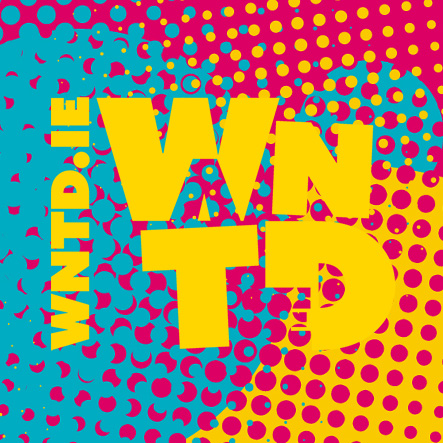
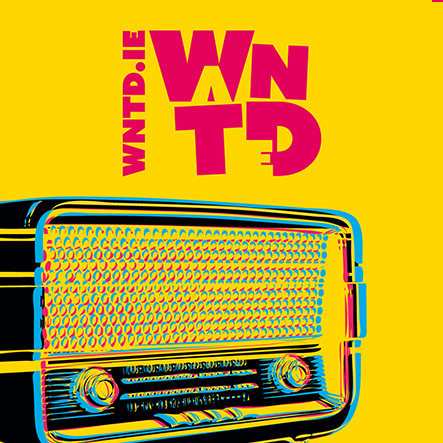
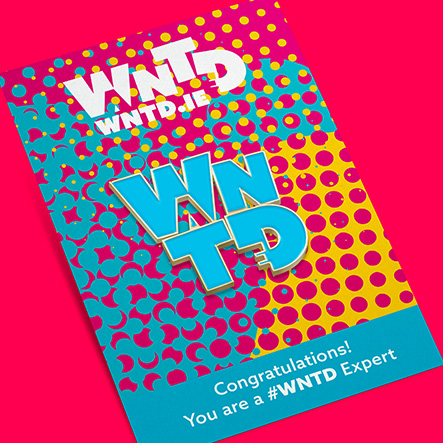
The logo was designed to embody the brand’s core idea without a single word of explanation. Deliberately off-balance — because failure rarely announces itself symmetrically — it carried a quiet layer of meaning underneath. The ‘a’ and ‘e’ of wanted were worked into the negative space, a nod to the truth the audience would never quite admit: they wanted this content desperately, they just wouldn’t say so out loud. The hashtag #WNTD was baked in from the start, with the four dominant letters designed to travel across social, merchandise, and digital placements with equal ease. A Universal Design, built for a universal curiosity.
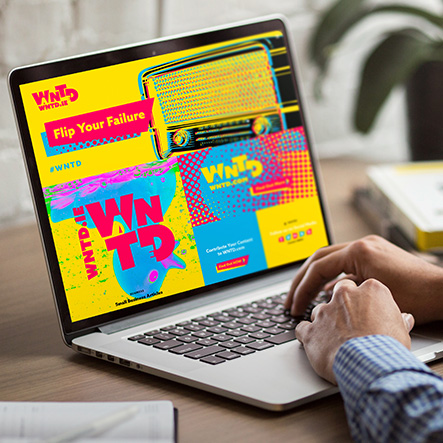
The colour palette borrowed from CMYK primaries — bold, coherent, flexible enough to hold the wildly varied imagery and illustration a platform like this demands. The aesthetic leaned into pop art and punk: radical in their day, joyful in retrospect. Old newspaper textures, vintage maps, analogue radios — traditional media, remixed for an audience that’s never bought a physical newspaper in their lives.
The result was a brand that felt like it had always existed. Bright, playful, and just a little bit subversive.
The Result
What Not To Do is more than a content platform. It’s a permission slip — for experts to be human, and for learners to stop pretending they have it figured out.
With a website, podcast network, social presence, and merchandise to carry the brand into the physical world, it’s built for global reach from day one. The subject areas are vast — beekeeping to boardrooms, DIY disasters to business pivots — because failure, it turns out, is the one thing every profession has in common.
It was always going to launch on the 13th of October. National Failure Day in Finland.
Or maybe not.