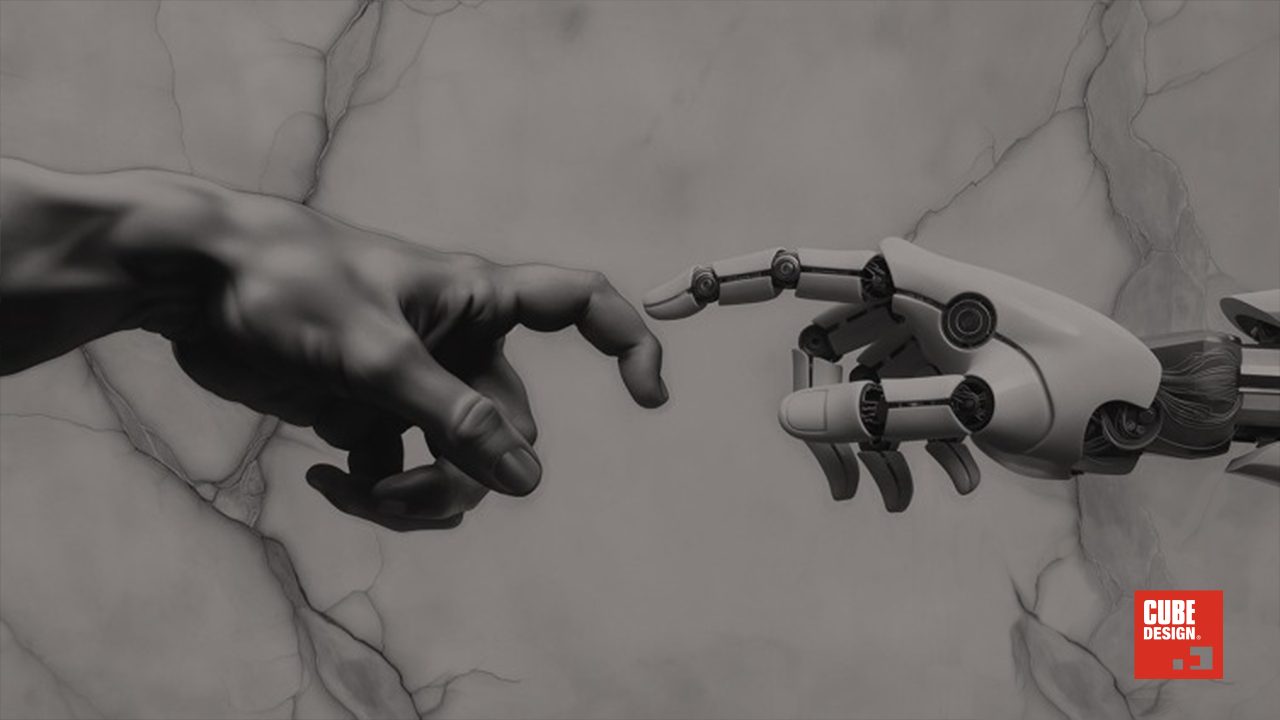
The EU AI Act on Creativity
Over the past year, artificial intelligence has gone from curiosity to creative collaborator to silent thief. As a brand designer, artist, and thinker, I’ve watched this evolution with a mix of awe and a huge unease.
And now, with the EU’s AI Act coming into enforcement since July last year with a 24 month implementation window, high risk AI systems such as biometric and decision making tools should have complied by January this year. It’s time we pull back the curtain, because the rules of the creative game are being rewritten, and currently they are not in our favour.
The Invisible Hands Behind the Algorithm
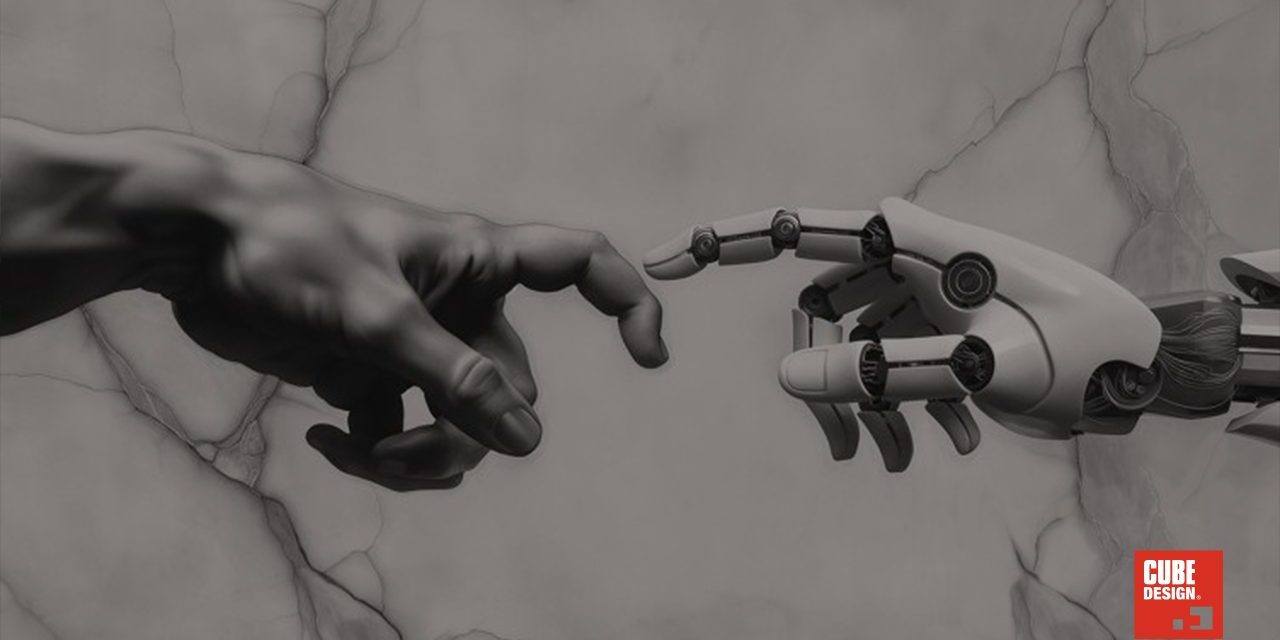
AI doesn’t create – it reconstructs, it learns from what’s already out there. It learns to ‘be creative’ by chewing through millions of works – photographs, paintings, logos, writing, music – all created by real people. People like you and me.
Most of those creators never gave consent. Most will never see credit, payment, or even acknowledgement. Under the EU’s Text and Data Mining (TDM) exception, AI systems can legally scrape public websites for training material – unless we explicitly opt out.
That means: Your portfolio. Your client work. Your articles, your ideas, your designs. To AI it’s all fair game, unless you’ve told it otherwise.
The EU AI Act: What You Need to Know
The EU’s AI Act, which is the first of its kind, sets out to regulate AI by risk level. It includes some big wins:
- Requiring disclosure when content is generated by AI
- Calling for transparency in how AI systems are trained
- Banning certain manipulative or high-risk uses of AI
- They must disclose what data was used to train the models and implement safeguards against harmful outputs.
But when it comes to creativity and ownership? My opinion is that it falls short. Enforcement details are still vague, especially around creative attribution, training data opt-outs, and redress mechanisms for creatives.
Here’s my thoughts:
- AI developers only need to provide summaries of training data, not the actual list of works they used.
- Attribution isn’t mandatory for the creators whose work was used to train these models.
- Creatives must opt out of data mining with code, even if someone else owns the rights to the work.
In short: The burden is on us, the humans. The originators. The ones whose work fuels the machine. And the fines for non-compliance, they’re steep – up to €35 million or 7% of global turnover, whichever is higher. This mirrors GDPR and signals serious regulatory teeth.
Transparency, with a Side of Vagueness
Transparency sounds good. But what does it really mean?
In practice, it’s unclear:
- Will AI platforms name the artists they’ve mimicked?
- Will businesses who use AI disclose it to clients?
- Will users of generative tools be forced to label AI-assisted work?
Right now, no. Not unless they choose to.
I recently became aware of the legal case that Disney and Universal Studios are taking against Midjourney for the use of their characters in AI – I’m very interested to see how this one goes, and I know it’s USA based, and I’m talking about an EU directive, but it all matters in the worldwide picture.
Dual Attribution: The Fight for Creative Truth
This is where dual attribution comes in.
In a world where machines imitate art, we must give credit where it’s due:
- To the person who directed the AI, yes.
- But also to the human creators whose work taught the model how to ‘think,’ ‘see,’ and ‘design.’
Imagine if your creative DNA was acknowledged, valued, respected. Not erased behind the sterile phrase: ‘AI-generated.’
This isn’t just ethical. It’s essential to protect the soul of creativity. Currently, out of respect, we as creators will always, (and have been taught to always do so in art college), at least most of us, some don’t, credit our fellow creators, like the photographers and illustrators we use, the designers we use, and so on.
Unasked but Important Questions for Creatives
Here are a few provocative prompts that might push the conversation further:
- What happens to cultural memory when AI rewrites it faster than humans can archive or protect it?
- If a client uploads my work to an AI tool for ‘inspiration,’ or to write their content who is liable for copyright breach – me or them?
- If a client uploads the strategy documents, logos, visuals, messaging guides that I gave them, and handed them the IP for, to an AI tool to write their content – what does it do to the IP?
- What happens when AI-generated content floods the internet, making it harder for original work to rise, or even be found?
- Could artists or designers unionise or license their style for fair use in AI training?
- Will we reach a point where the machine doesn’t just forget meaning – it erases the origin entirely?
One Big Gap in the EU AI Act for Creatives
While the Act is robust in regulating risk–based AI systems, it is not an IP or copyright law, which means:
- It does not stop your work being scraped, only requires that the model trainer summarise data sources.
- It does not guarantee attribution, fair compensation, or transparency unless platforms adopt those policies voluntarily.
That gap? It’s where the fight for creative justice begins. Marty Neumeier we have to fight a new Gap
What We Can Do (Starting Now)
1. Add bold copyright notices telling AI to back off.
2. Update client contracts to ban AI training without permission (and make sure they only upload your work for them on their own paid AI accounts where they have switched off the training mode)
3 When you hand over the IP to your client, give them guidelines for using AI that protects the IP.
4. Speak up on social media, on your website, in conversations.
5. Support creators and collectives demanding change.
This is not about being anti tech. It’s about setting boundaries in a space that worships efficiency but forgets origin.
I hear plenty of businesses talking about creativity without knowing what that means. To some its plagiarism, so when they use AI they don’t care.
Creators, It’s Time to Reclaim Our Fire
The EU AI Act is a first draft of the future. But we are the ink. We are the brushstroke, the baseline, the bold idea before the machine even wakes up.
Don’t be silent. Don’t be scraped, trained, and forgotten. Be loud. Be clear. Be unapologetically human. And remind the world that creativity isn’t code, it’s heart and soul.
What are your next steps?
Ready to rethink, rebuild, and rise — and become impossible to ignore? Book a no obligation conversation and let’s see if I can support you.