Holding the Line Between Creativity, Culture and Code.
Over the weekend, I came across an article that made me sit up and think. I wrote last week about protecting our creativity in an AI world, but this article…It wasn’t about an individual artist being copied. It was about entire cultures being flattened.
The article – How AI images are flattening Indigenous cultures, creating a new form of tech colonialism – argues that AI tools are doing what colonisers have done for centuries: reducing Indigenous identity to stereotypes, symbols, surface. Spitting out composite images that look ‘tribal’ but belong to no one. That blend sacred symbolism from one people with the body of another. It’s cultural confusion with a glossy finish. A hallucination that looks like celebration, but reeks of erasure.
My Recent Travels Made This More Obvious to Me
I recently travelled to Vietnam, Australia and New Zealand. I didn’t go looking for this thread of cultural loss, but it found me.
In Australia and New Zealand, I was drawn to the stories of First Nations peoples. So much dignity, and so much beauty, and so much still being taken from them. This is why the article linked above drew me in.
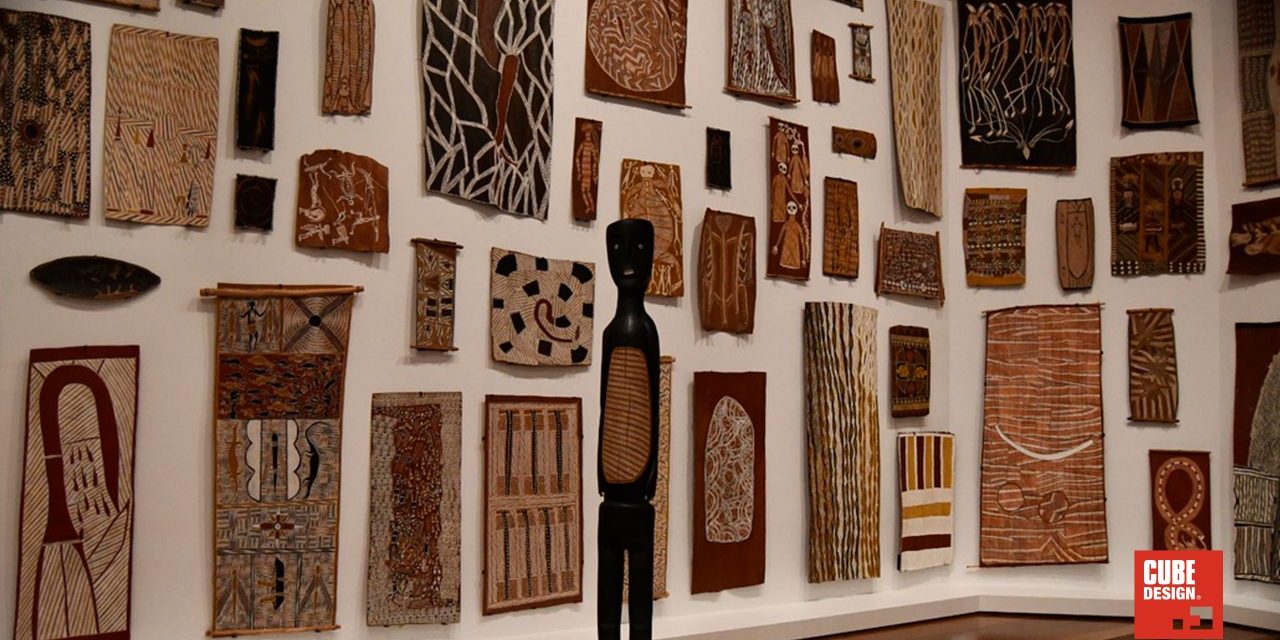
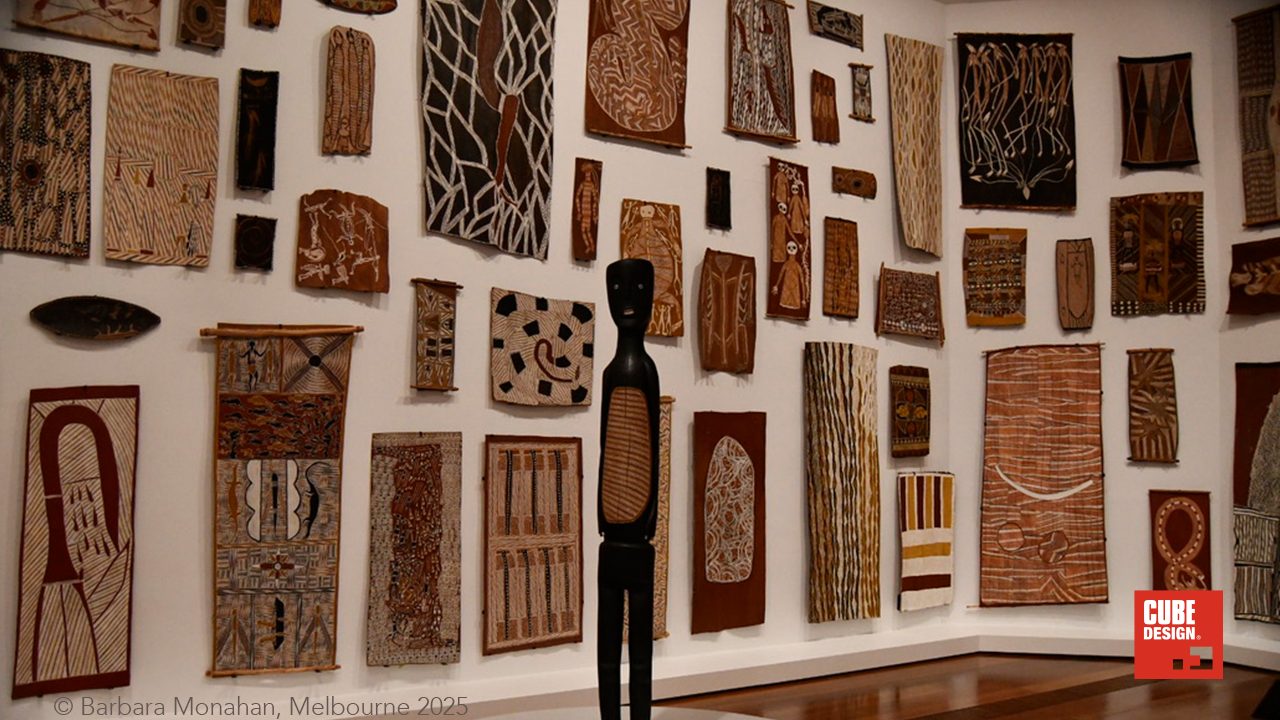
In a Melbourne gallery, I stood in awe at a breathtaking Aboriginal Art Exhibition. The depth of the work in symbolism. The Patterns that told so many stories. The earth being central to their art. But, afterwards I went to look for some postcards of their art to take away as memories and keep in my creative space. In the gallery shop, where culture meets commerce, I found no postcards of those works. What I found were one or two token postcards, and plenty of prints by a colonial-era European painter who’s work was also exhibited. A beautiful artist, who’s work I also loved. Maybe it was just that they had sold out? But this is a permanent exhibition, and the balance that was in the exhibition was not in the gallery shop. But that’s the problem, isn’t it? The absence of the present. The marginalisation of what’s living. The invisibility of those whose land we walk on.
A Sacred Story of Tattoos and Legends
In another museum in New Zealand, where there was much to learn about their traditions and culture, I learned of a powerful Māori legend: Mataora, was a man from the human world, who fell in love with Niwareka, a spirit from the underworld of Rarohenga. But he abused her, and so she returned to her people in the underworld. Mataora filled with remorse traveled to the underworld to find Niwareka, with his face crudely painted. He was ridiculed for his fake appearance, and Niwareka’s father, Uetonga, took pity on Mataora, wiping the paint from his face, to show the worthlessness of it, and then carved (with chisels called Uhi…ouch!!) a permanent Ta Moko (tattoo) into his skin. Ta Moko is a powerful symbol of identity, ancestry, and social standing, which is very important to the Māori people. Mataora returned to the human world with Niwareka with the learned knowledge of Tā Moko, and it’s importance in carrying lineage, honour, and identity.
This is Where it Got to Me.
Today, Māori women wear Moko Kauae, which is the female equivalent of the Ta Moko, worn on their lips and chin as a mark of their voice, of their womanhood, of their motherhood, of their important role in the community. It is not body art. It is not something to be scraped from the internet and fed into a prompt.
Yet AI engines now generate stylised ‘tribal’ faces, adding Moko to the wrong faces, placing patterns where none belong, flattening centuries of meaning into mood board aesthetics. Can a machine wear shame? Can it carry penance? Can it ask permission?
As I travelled around, I did see more women with facial tattoos. Colonisation tried to supress these tattoos, but thankfully there is now a resurgence and a pride emerging in the wearing of these tattoos.
So What Happens Next?
I use AI in my work, to spark ideas, and build my own ideas, not to steal. I feed it my words, my context, my complexity, and I reshape what it returns with the care of a human. But I do not, and will not, ask it to imitate stories that aren’t mine to tell. That’s where my human ethics and morals come into it.
Because this is the line in the sand: Creativity is not just clever output. It’s soul, scar, survival. It’s rooted in place, memory, language, ceremony. It’s not something that can be generated. It must be earned, created, and lived.
The Questions We Must Ask.
- Whose voices are included in the training? A work friend of mine Lee Bristow talks about the base models for learning in AI, and we need to know what these are. In the article I reference here, Adobe’s Firefly was the creator of the so called tribal image of First Nation people. Lee suggested that it could be their base model is wrong.
- Who gets erased in the process? As we talk about diversity and inclusion (really we shouldn’t have to talk about it, but unfortunately we do) we must keep things in check and use our moral compass to guide what we do or don’t do, keep it human
- And when we create, who are we speaking for, and who are we silencing? We do have a power, whether we know it or not, but we have to use it wisely, mindfully and with respect.
As artists, designers, brand builders, and creators, we have power. Let’s use it to honour, not harvest. To uplift, not overwrite. To ensure that AI becomes a tool for equity, not a new weapon of colonisation.
The future of creativity isn’t artificial. It’s fiercely, and unapologetically human.
What are your next steps?
Ready to rethink, rebuild, and rise — and become impossible to ignore? Book a no obligation conversation and let’s see if I can support you.